Which Digital Marketing Tools Are Best for SEO, Leads & Business Growth in 2026?
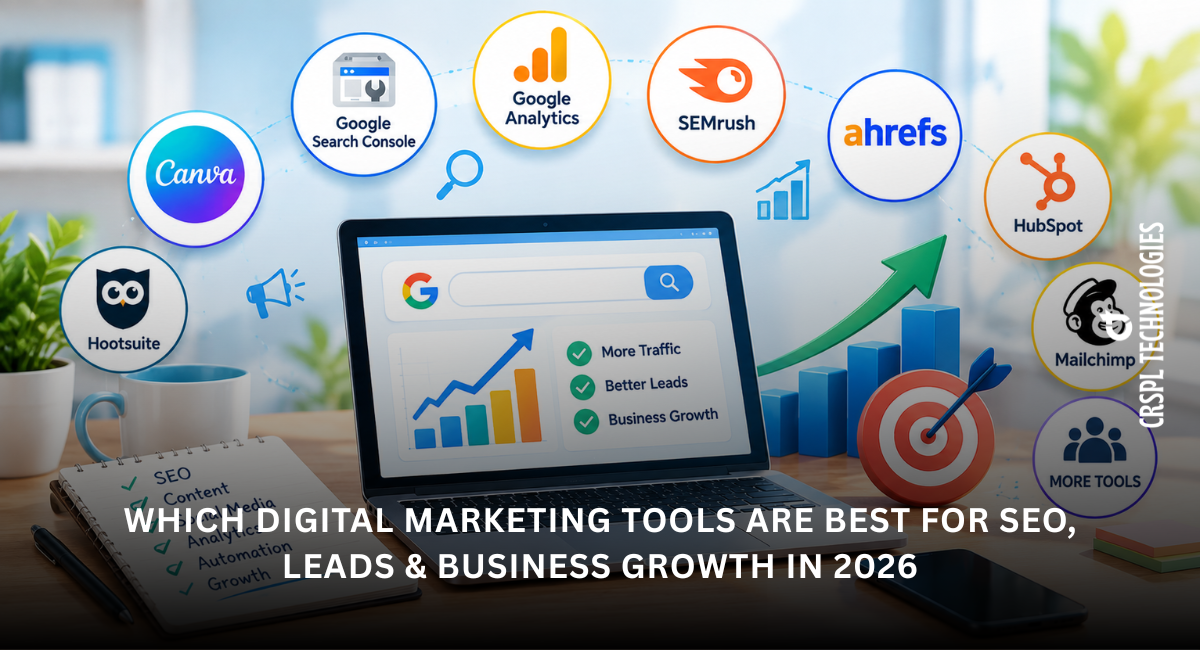
The best digital marketing tools for SEO, leads and business growth in 2026 include Google Search Console, Google Analytics, Semrush, Ahrefs, Google Keyword Planner, HubSpot, Zoho CRM, Buffer and Canva.
However, businesses do not need every available platform. The right combination depends on their marketing objectives, budget, team size and ability to use the data effectively. Small businesses can begin with free tools and adopt paid platforms when they require advanced research, automation or reporting.
Businesses seeking a focused marketing strategy can consult CRSPL Technologies for support in selecting and managing the right digital tools.
Quick Summary
- Use Google Search Console and Google Analytics for website insights.
- Consider Semrush or Ahrefs for the advanced SEO research.
- Use Google Keyword Planner when planning search campaigns.
- Generate leads through Google Ads or Meta Ads Manager.
- Manage enquiries through HubSpot or Zoho CRM.
- Schedule social content using Meta Business Suite or Buffer.
- Use AI tools to support and not replace the human marketing decisions.
Best Digital Marketing Tools in 2026
|
Marketing objective |
Suitable tools |
Main purpose |
|
SEO |
Search Console, Semrush, Ahrefs |
Keywords, rankings, backlinks and website audits |
|
Analytics |
Google Analytics |
Traffic, user behaviour and conversions |
|
Keyword planning |
Google Keyword Planner |
Search terms and advertising estimates |
|
Paid leads |
Google Ads, Meta Ads Manager |
Search and social advertising |
|
Lead management |
HubSpot, Zoho CRM |
Lead tracking and follow-ups |
|
Email marketing |
Mailchimp, Brevo |
Campaigns and automated emails |
|
Social media |
Meta Business Suite, Buffer |
Scheduling and performance tracking |
|
Creative work |
Canva |
Graphics, videos and advertisements |
|
AI assistance |
ChatGPT, Gemini, Canva AI |
Research, ideation and content development |
Free plans, trials and feature limits may change. Businesses should review the current features and pricing before choosing a platform.
Which Tools Are Best for SEO?
Google Search Console is one of the most useful free digital marketing tools in India in 2026. It provides information about search queries, clicks, impressions, indexing and website visibility on Google Search.
Google Analytics helps businesses understand where visitors come from, how they interact with a website and whether they complete important actions. Used together, these platforms provide a practical starting point for measuring organic performance.
Businesses requiring more detailed research can consider Semrush or Ahrefs. Semrush covers keyword research, competitor analysis, site auditing, PPC research and the visibility monitoring. Ahrefs offers Site Explorer, Keywords Explorer, Site Audit, Rank Tracker and backlink-analysis features. Both platforms also provide tools for monitoring visibility in conventional and AI-assisted search.
Google Keyword Planner is useful for discovering relevant search terms and reviewing advertising estimates when preparing Google Ads campaigns. However, keyword data should be combined with customer intent rather than used as the only basis for content decisions.
Which Tools Are Best for Generating Leads?
Google Ads can reach people actively searching for a product or service. Meta Ads Manager can help businesses to reach and retarget audiences across Facebook and Instagram.
Lead-generation campaigns require a suitable landing page, clear offer and reliable follow-up system. HubSpot CRM and Zoho CRM can record enquiries, assign prospects, track communications and monitor movement through the sales pipeline. HubSpot combines marketing, sales, customer service and CRM functions within one platform.
For email marketing, Mailchimp and Brevo can support audience segmentation, campaign delivery and automated follow-ups. Their free or entry-level access may carry limits on contacts, emails or features.
A digital marketing agency in Delhi can connect advertisements, landing pages and CRM systems so enquiries are properly recorded and followed up.
Which Tools Support Social Media and Content Creation?
Meta Business Suite is suitable for the businesses mainly using Facebook and Instagram. Buffer is a convenient option for scheduling content across multiple supported social networks, although available channels and features depend on the selected plan.
Canva helps create social media posts, videos, presentations and advertising materials. Its Magic Design feature can generate editable design options from prompts and uploaded media.
AI assistants such as ChatGPT and Gemini can support research, outlines, advertisement variations and content repurposing. AI output must still be checked for factual accuracy, originality, brand consistency and misleading claims.
How Should Businesses Choose Their Tools?
Start with a measurable objective, such as increasing qualified enquiries, improving organic traffic or reducing lead-response time. Select one tool for each essential activity and assess whether it contributes to conversions or revenue.
Businesses collecting names, contact details or behavioural data must also follow applicable Indian privacy, consent and electronic-communication requirements. Access controls and privacy settings should be reviewed before customer information is uploaded to any platform.
CRSPL Technologies can help businesses create an integrated marketing system without unnecessary software subscriptions.
| Read More: WhatsApp Marketing Agency for Local Businesses in Delhi NCR |
Conclusion
The best marketing stack is not necessarily the largest or most expensive. Begin with dependable analytics, select tools suited to specific goals and evaluate performance regularly. Technology can improve efficiency, but sustainable business growth still depends on strategy, useful content, accurate targeting and timely sales follow-ups.