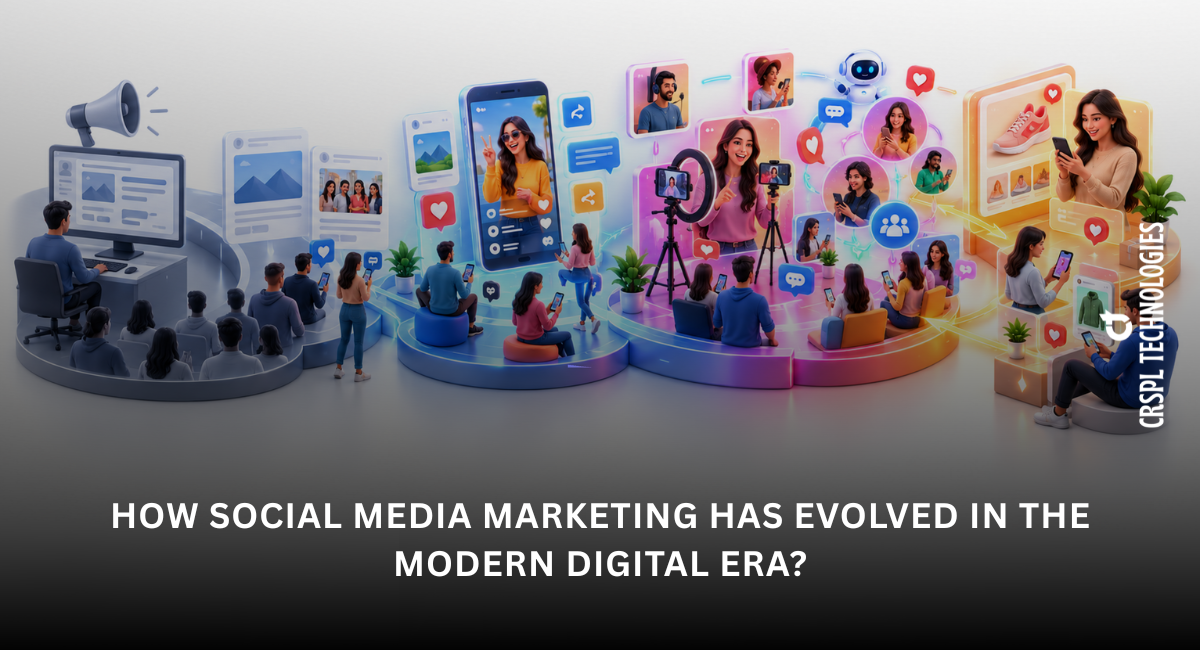
How Social Media Marketing Has Evolved in the Modern Digital Era?
Social media marketing has undergone a notable transformation over the past decade. What initially began as a basic online presence tool and element has evolved into a sophisticated, data-driven and customer-centric marketing discipline. With billions of active users across various platforms such as Facebook, Instagram, LinkedIn, X (formerly Twitter), YouTube and emerging platforms like Threads, social media has become one of the most influential channels for brand building and business growth.
Industry reports, platform guidelines and marketing frameworks consistently highlight that social media is no longer optional, it is a core component of modern digital marketing strategies. This blog explores how social media marketing has evolved and what defines its current form in today’s digital ecosystem.
From Presence-Based to Strategy-Driven Marketing
In its early phase, social media marketing focused primarily on visibility. Brands created profiles, posted occasional updates and measured success through surface-level metrics such as likes, followers or page views. There was limited focus on audience intent, content planning or measurable business outcomes.
Today, social media marketing is deeply strategic. Platforms themselves emphasize goal-oriented planning, whether the objective is brand awareness, lead generation, community building or any conversions. Marketers now work with structured content calendars, platform-specific strategies, defined buyer personas and measurable performance indicators. Each post or campaign is designed to align with broader marketing and business objectives, reflecting a more mature and the results-driven approach.
Shift from Organic Reach to Paid and Hybrid Models
In the early days, organic reach was the foundation of social media success. Brands could reach a significant portion of their audience without paid promotion. However, as platforms expanded and content volume increased, algorithms evolved to prioritize personal connections, relevance and quality interactions.
As officially communicated by major platforms, organic visibility for business pages has declined, making paid advertising an essential component of modern strategies. Sponsored posts, video ads, story ads and retargeting campaigns now allow businesses to reach highly specific audiences based on demographics, interests, behaviour and intent. The most effective approach today is a hybrid model, using organic content to build trust and credibility while leveraging paid campaigns for scale, reach and conversions.
Content Evolution: From Text Posts to Immersive Experiences
Content formats on social media have evolved dramatically. Early marketing efforts relied heavily on the text updates and various static images. Today, platforms actively promote dynamic, immersive and interactive content formats.
Short-form videos, reels, stories, live streams, carousels and interactive posts dominate user feeds. Platform insights consistently indicate that video-first content drives higher engagement, retention and discoverability. As a result, brands now prioritize storytelling, authenticity and visual appeal. User-generated content, behind-the-scenes insights, educational videos and real-time interactions have become central to effective content strategies.
Rise of Influencer and Creator Marketing
One of the most defining developments in the social media marketing is the high rise of influencers and content creators. Earlier, brand endorsements were largely limited to celebrities and large corporations. Social media has democratized influence by enabling niche creators to build loyal and highly engaged audiences.
Today, industry studies and various platform partner programs emphasise the effectiveness of micro-influencers and niche creators. Their content usually delivers higher engagement and an element of trust compared to traditional advertising. Influencer marketing has evolved into a structured ecosystem involving contracts, performance metrics, long-term collaborations and compliance requirements, making it a reliable and measurable marketing channel.
Data-Driven Decision-Making and Advanced Analytics
Modern social media marketing is firmly rooted in data. Earlier, marketers relied on basic metrics such as follower count or post likes. Today, platforms provide advanced analytics covering reach, impressions, engagement rate, click-through rate, conversions, cost per lead and return on ad spend.
Official platform tools and third-party analytics solutions enable real-time performance tracking and optimization. Marketers regularly conduct A/B testing, audience segmentation and behavioural analysis to refine campaigns. As a result, decisions are increasingly driven by actionable insights rather than assumptions or intuition.
Social Media as a Customer Experience and Engagement Channel
Social media has evolved beyond promotion into a critical customer experience channel. Consumers increasingly expect brands to respond to queries, complaints and feedback directly through social platforms.
Platforms now support business messaging, automated chatbots and CRM integrations, allowing brands to deliver timely and personalized responses. Social listening tools further enable businesses to monitor conversations, sentiment and emerging trends. This shift reinforces the role of social media as a relationship-building and reputation-management platform rather than just a marketing channel.
Integration with E-Commerce and Conversion-Focused Features
One of the most notable developments in recent years is the integration of social media with e-commerce. Features such as shoppable posts, product tagging, in-app checkout and live shopping events have shortened the path from discovery to purchase.
Official platform documentation positions social commerce as a key growth area, transforming social media into a direct revenue-generating channel. Businesses can now easily guide various users from inspiration to transaction without leaving the platform, making social media an essential component of the digital sales funnel.
Emphasis on Authenticity, Ethics and Community Building
Modern audiences place a high value on authenticity, transparency and ethical communication. Platforms and industry bodies consistently emphasize purpose-driven marketing, inclusivity, sustainability and social responsibility.
Community building has also become a central focus. Rather than broadcasting messages, brands now engage in two-way conversations, encourage user participation and foster loyal communities around shared values. This shift reflects a move from transactional marketing to long-term relationship building.
| Read More: What Is Community-Centric Marketing and Why It Matters? |
Conclusion
Social media marketing has transformed from simple online promotion into a comprehensive, multifaceted discipline that combines creativity, data, technology and genuine human engagement. Today, success relies on a deep and better understanding of platform algorithms, audience behaviour, content trends and performance analytics, while consistently maintaining authenticity and meaningful interaction.
As platforms continue to innovate, evolve and user expectations rise, in that case, social media marketing will continue to evolve. Businesses that adapt strategically, leverage data responsibly and prioritise value-driven engagement will remain competitive and also relevant in an increasingly dynamic digital landscape. If you need assistance then do contact to CRSPL Technologies, for any digital marketing solution.