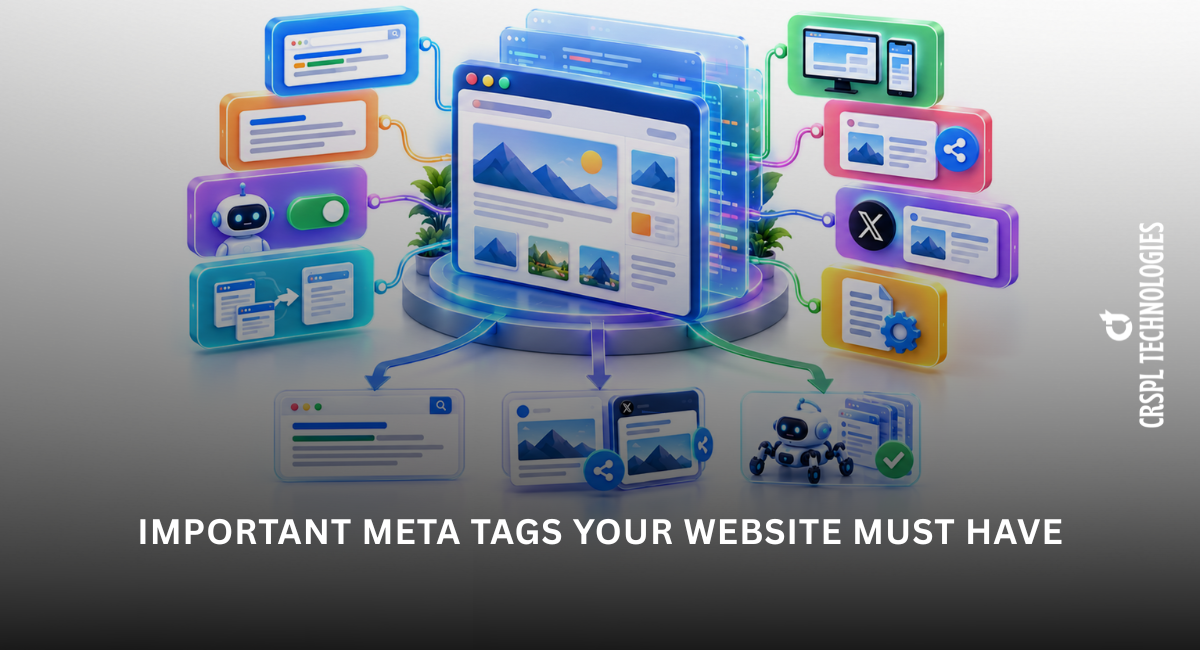
Important Meta Tags Your Website Must Have
In today’s modern digital world, building a website is not enough, you must also make sure search engines understand your content. This is where meta tags play a major role. Meta tags are small pieces of HTML code placed inside the section of a webpage. They don’t appear on the page itself, but they help search engines such as Google understand what your page is about.
Using the right meta tags can easily improve your website’s ranking, boost click-through rates and enhance user experience. Whether you run a business website, blog, e-commerce store or portfolio site, adding proper meta tags is essential.
This blog explains the most important meta tags your website must have, their purpose and why they matter.
Important Meta Tags
1. Title Tag
The title tag is one of the most important SEO elements on any webpage. It tells search engines and users what the page is about. This title appears on search engine results pages (SERPs) and is the first thing a user sees.
Why It Matters
- Helps search engines understand the topic.
- Strongly influences ranking.
- Encourages users to click.
Best Practices
- Keep it under 60 characters.
- Include your main keyword.
- Use a clear and readable structure and framework.
- Avoid keyword stuffing.
2. Meta Description Tag
The meta description provides a brief and short summary of your webpage. Though it doesn’t directly impact on ranking, it plays an essential role in improving click-through rates.
Why It Matters
- Appears under the title in search results.
- It helps users to understand regarding what the page offers.
- Increases chances of getting clicks when written well.
Best Practices
- Keep it between 120–155 characters.
- Explain the core benefit or unique value.
- Include one or two keywords naturally.
- Make it persuasive and action-oriented.
3. Meta Keywords Tag (Optional)
Meta keywords were once used heavily, but search engines such as Google no longer rely on them. However, some small search engines still consider them and a few CMS tools use them internally.
Why It Matters
- Not essential for SEO today.
- Can still be used for internal organization in some content systems.
Best Practices
- If used, keep them relevant and minimal.
- Do not overuse or repeat keywords.
4. Canonical Tag
Duplicate content can harm your website’s SEO, but a canonical tag helps to prevent this by indicating to search engines which webpage should be treated as the main or preferred version.
Why It Matters
- Prevents duplicate content penalties.
- Helps consolidate ranking signals.
- Useful for e-commerce sites with similar product pages.
Best Practices
- Use the canonical tag on pages with similar or duplicate content.
- Always point the tag to the correct “master” URL.
5. Robots Meta Tag
The robots meta tag gives instructions to search engine crawlers about how to index your page.
Common Values
- index/noindex – whether the page should appear in search results.
- follow/nofollow – whether crawlers should follow links on the page.
Why It Matters
- Helps control which pages should or shouldn’t be indexed.
- Useful for pages like admin panels, thank-you pages or duplicate pages.
Best Practices
- Use noindex for pages not meant for public search.
- Use nofollow carefully to avoid wasting link equity.
6. Viewport Meta Tag
The viewport tag is essential for mobile-friendly websites. It helps the browser adjust the webpage layout according to the device screen.
Why It Matters
- It ensures mobile responsiveness.
- It also helps to improves user experience.
- It helps with better mobile SEO rankings.
Best Practice Example
7. Open Graph Tags (OG Tags)
Open Graph tags control how your webpage appears when shared on various social media platforms such as Facebook, LinkedIn or WhatsApp.
Common OG Tags
- og:title
- og:description
- og:image
- og:url
Why They Matter
- Help create attractive previews.
- Increase social clicks and engagement.
- Improve brand visibility.
8. Twitter Card Tags
Similar to OG tags, Twitter Card tags define how your webpage looks when shared on Twitter (X).
Why They Matter
- Make your shared links stand out.
- Support rich previews like images, videos and summaries.
9. Charset Meta Tag
The charset tag defines the character encoding used by a webpage. Setting it to UTF-8 helps your website display multiple or numerous languages and symbols correctly.
Why It Matters
- It helps to prevent display issues for special characters.
- It helps to ensure consistent text rendering across various devices.
10. Language Meta Tag (Optional but Useful)
The content-language tag tells search engines the main language of your page.
Why It Matters
- Helps with geo-targeting.
- Improves understanding for multilingual sites.
11. Refresh Meta Tag (Use Sparingly)
This tag can help to refresh a page automatically or redirect users after a few seconds.
Why It Matters
- Useful only in special type of cases, such as temporary warnings or notifications.
- Avoid using it for the purpose of SEO redirects, as search engines prefer 301/302 redirects.
Read More: WordPress SEO Checklist — Step-by-Step Guide With Plugins |
Conclusion
Meta tags may not be visible to users, but they play a powerful role in SEO, user experience and social visibility. A well-optimized website must include essential meta tags like title, meta description, robots, viewport, canonical and Open Graph tags. These tags help search engines to understand your content better, improve click rates and ensure your website displays properly across devices and platforms. If you need professional help in marketing for your brand, do contact to CRSPL Technologies, our expert will assist you.
If you haven’t optimized your meta tags yet, now is the best time to implement them and boost your website’s performance.