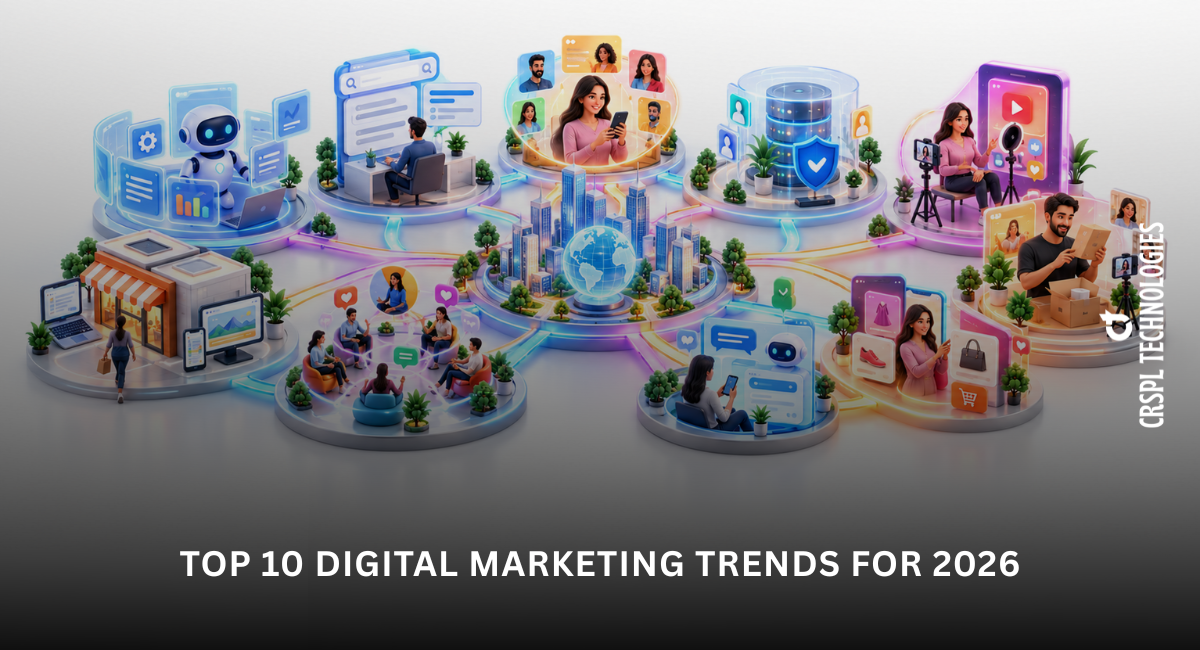
Top 10 Digital Marketing Trends for 2026
The digital marketing landscape is evolving at an unprecedented pace. Rapid advancements in the technology, changing consumer expectations and increased competition are redefining how brands connect with their audiences. As we step into 2026, businesses must stay ahead of emerging trends to remain relevant, competitive and growth-focused. This blog explores the top 10 digital marketing trends for 2026 that will shape the strategies, platforms and consumer engagement.
Digital Marketing Trends for 2026
1. Artificial Intelligence Becomes the Core of Marketing
By 2026, artificial intelligence will no longer be a supporting tool, it will be at the heart of digital marketing. AI will power content creation, audience segmentation, ad optimization, predictive analytics and customer interactions. Marketers will increasingly rely on AI to analyse consumer behaviour in real time and deliver personalized experiences at scale. AI-driven tools will improve efficiency while enabling smarter, data-backed decision-making.
2. Hyper-Personalization Across All Channels
Consumers expect brands to understand their preferences, requirements and behaviours. In 2026, hyper-personalization will move beyond using first names in emails. Brands will deliver tailored content, product recommendations and messaging across websites, social media, ads and emails based on user intent and behaviour. Businesses that fail to personalize experiences risk losing engagement and customer loyalty.
3. Evolution of SEO into Answer-Based Optimization
Search behaviour is changing rapidly due to AI-powered search engines and voice assistants. Instead of focusing solely on the keywords, marketers will need to optimize content to directly answer user questions. Structured and organised content, FAQs and authoritative information will gain prominence. Brands that position themselves as reliable, authentic sources of accurate and proper answers will enjoy the greater visibility in search results.
4. Continued Dominance of Short-Form Video Content
Short-form videos will remain one of the most powerful and preferred marketing formats in 2026. Platforms such as Instagram, YouTube and emerging video channels will prioritize quick, engaging and authentic content. Brands will use short videos for storytelling, product education, behind-the-scenes glimpses and user engagement. Creativity and authenticity will matter more than high production costs.
5. Voice Search and Conversational Marketing Growth
Voice search adoption will continue to rise as smart devices and AI assistants become more integrated into daily life. Marketers will need to optimise content for conversational and natural language queries. In addition, conversational marketing through chatbots, messaging apps and AI assistants will play an essential role in customer support, lead generation and real-time engagement.
6. Immersive Experiences Through AR and VR
Augmented Reality and Virtual Reality will transform and evolve digital marketing into an interactive experience. From virtual product try-ons to immersive brand storytelling, all these technologies help to strengthen customer engagement and confidence in purchasing decisions. By 2026, AR and VR will become more accessible and approachable, allowing even small businesses to create immersive marketing experiences.
7. Privacy-First and Data-Ethical Marketing
With increasingly stringent data protection laws and the decline of third-party cookies, marketers must adopt privacy-focused strategies. First-party and zero-party data, data willingly shared by the various users, will become the foundation of digital marketing. Transparency, consent and ethical data usage will help brands build trust and long-term customer relationships.
8. Creator and Influencer Partnerships Evolve
In 2026, influencer marketing will go beyond sponsored posts. Brands will collaborate with creators as long-term partners, involving them in campaign planning, content creation and even product development. Micro and niche creators will gain importance due to their high engagement rates and the authentic connections with specific audiences.
9. Marketing Automation and Cross-Channel Integration
Automation tools will bring all marketing activities together across different platforms, ensuring consistent messages and smooth customer journeys. From automated emails to AI-based ad management, automation will reduce manual work and make campaigns more efficient. Businesses will focus on connecting social media, websites, ads and CRM systems into one unified system.
10. Community-Driven and Human-Centric Branding
Even with many new technologies, human connection will remain the most important part of marketing. Brands will focus on building online communities, encouraging customers to share their content and creating meaningful interactions. By 2026, consumers will prefer brands that are authentic, reliable, socially responsible and emotionally engaging rather than those that only promote their products.
| Read More: How Duplicate Content Affects AI Search Visibility? |
Conclusion
Digital marketing trends in 2026 will combine advanced technology with a strong focus on people. Artificial intelligence, personalised content, immersive experiences and responsible use of data will change how brands connect with audiences. At the same time, authenticity, trust, confidence and community building will remain essential for success. Businesses that adapt early, keep innovating and put customer experience first will be better prepared to succeed in the changing digital world. If you need assistance then do contact to CRSPL Technologies, for any digital marketing solution.